
 Image 1 of 3
 Image 2 of 3
 Image 3 of 3
Spiraea tomentosa
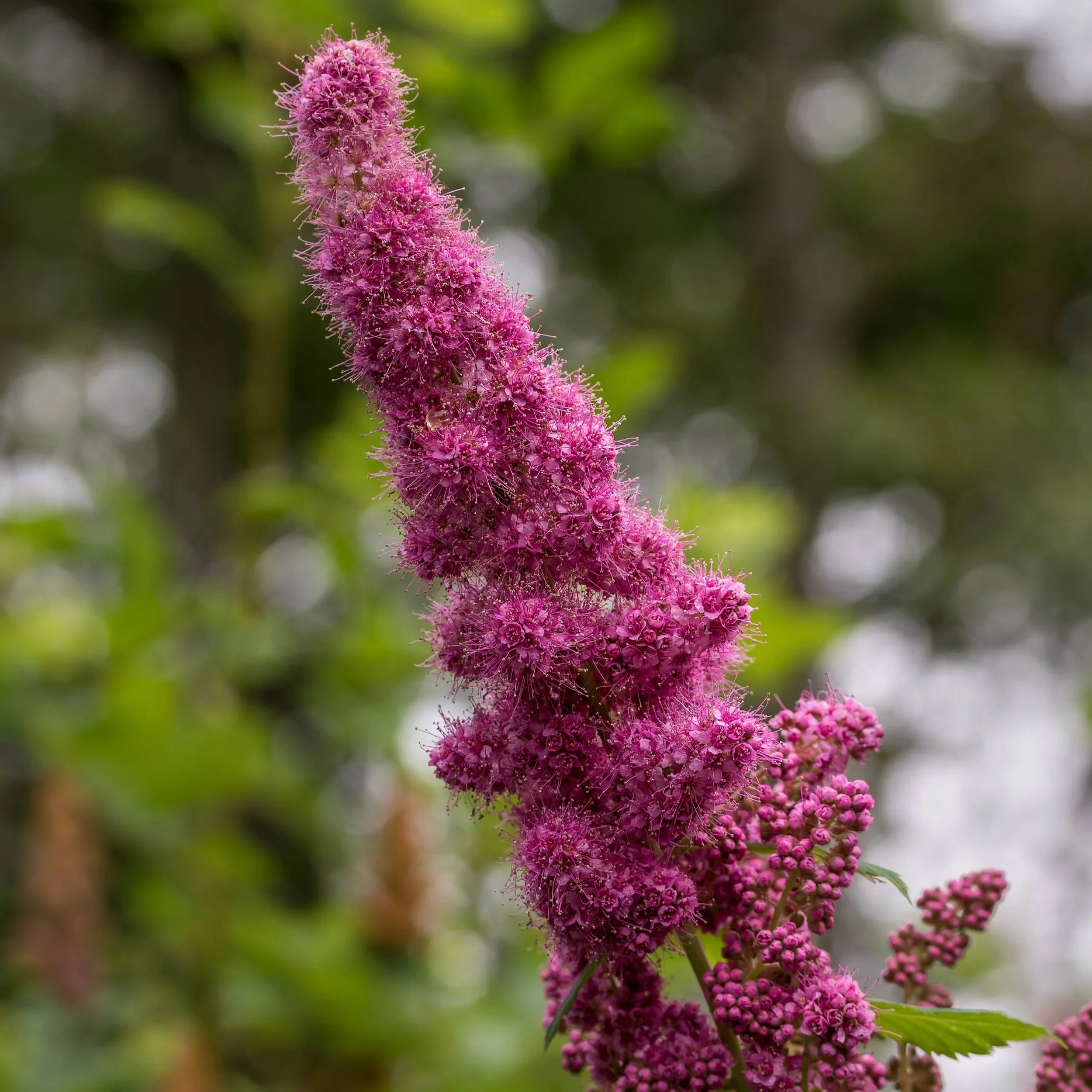
The Steeplebush Spiraea is a hardy native shrub known for its upright growth, vibrant pink flower spikes, and strong adaptability to wet soils. Blooming in mid to late summer, this plant adds vertical interest and long-lasting color when many other shrubs have finished flowering.
Commonly found in meadows, wetlands, and roadside plantings, Steeplebush is an excellent choice for naturalized landscapes, pollinator gardens, and areas with challenging moisture conditions.
Steeplebush Spiraea Overview
🌿 Botanical Name: Spiraea tomentosa
🏷️ Common Names: Steeplebush, Hardhack
🌳 Mature Height: 3–5 feet
🌐 Mature Width: 3–4 feet
📈 Growth Rate: Moderate to fast
⏳ Lifespan: 20–30+ years
🧊 USDA Zones: 3–8
❄️ Chill Hours: 600–1,000 hours
☀️ Sun Preference: Full sun to partial shade
🧱 Soil Type: Moist to wet soils; tolerates clay and poor drainage
⚖️ Soil pH: Acidic to neutral (5.0–7.0)
💧 Water Needs: Moderate to high; thrives in consistently moist conditions
🌸 Flower Color: Bright pink spires; mid to late summer
🍒 Fruit Type: Small dry seed capsules; not ornamental
🐝 Pollinators: Attracts bees, butterflies, and beneficial insects
🌿 Growth Habit: Upright, clump-forming, suckering shrub
↔️ Spacing: 3–4 ft apart
🏡 Landscape Uses: Rain gardens, wetland edges, native plantings, pollinator gardens
🧹 Maintenance Level: Low
Environmental Benefits
🌸 Provides late-season nectar for pollinators when other sources decline
🐝 Supports bees, butterflies, and beneficial insects
🌧️ Excellent for rain gardens and water management areas
🌱 Helps stabilize soil in moist or erosion-prone environments
Pros & Cons
✅ Native plant with strong ecological value
✅ Excellent for wet soils and rain gardens
✅ Vibrant pink blooms add late-season color
✅ Low maintenance and adaptable to poor soils
✅ Supports pollinators and biodiversity
⚠️ Can spread through suckers in ideal conditions
⚠️ Not suited for dry or drought-prone areas
⚠️ May look less refined in formal landscapes
⚠️ Benefits from occasional thinning to control spread
⚠️ Limited ornamental appeal outside bloom period
Planting & Care Guide
🛁 Water thoroughly before and after planting to reduce transplant shock
🕳️ Plant in moist soil at the same depth as the root system
🌾 Apply mulch to retain moisture and suppress weeds
💦 Keep soil consistently moist, especially during establishment
✂️ Prune in late winter or early spring to encourage fresh growth
🧪 Fertilize lightly if needed, though it thrives in low-fertility soils
The Steeplebush Spiraea is a resilient native shrub that excels in wet environments while delivering bold summer color and pollinator support. Whether used in rain gardens, naturalized plantings, or ecological restoration areas, it provides both function and seasonal beauty with minimal upkeep.
Spiraea tomentosa
The Steeplebush Spiraea is a hardy native shrub known for its upright growth, vibrant pink flower spikes, and strong adaptability to wet soils. Blooming in mid to late summer, this plant adds vertical interest and long-lasting color when many other shrubs have finished flowering.
Commonly found in meadows, wetlands, and roadside plantings, Steeplebush is an excellent choice for naturalized landscapes, pollinator gardens, and areas with challenging moisture conditions.
Steeplebush Spiraea Overview
🌿 Botanical Name: Spiraea tomentosa
🏷️ Common Names: Steeplebush, Hardhack
🌳 Mature Height: 3–5 feet
🌐 Mature Width: 3–4 feet
📈 Growth Rate: Moderate to fast
⏳ Lifespan: 20–30+ years
🧊 USDA Zones: 3–8
❄️ Chill Hours: 600–1,000 hours
☀️ Sun Preference: Full sun to partial shade
🧱 Soil Type: Moist to wet soils; tolerates clay and poor drainage
⚖️ Soil pH: Acidic to neutral (5.0–7.0)
💧 Water Needs: Moderate to high; thrives in consistently moist conditions
🌸 Flower Color: Bright pink spires; mid to late summer
🍒 Fruit Type: Small dry seed capsules; not ornamental
🐝 Pollinators: Attracts bees, butterflies, and beneficial insects
🌿 Growth Habit: Upright, clump-forming, suckering shrub
↔️ Spacing: 3–4 ft apart
🏡 Landscape Uses: Rain gardens, wetland edges, native plantings, pollinator gardens
🧹 Maintenance Level: Low
Environmental Benefits
🌸 Provides late-season nectar for pollinators when other sources decline
🐝 Supports bees, butterflies, and beneficial insects
🌧️ Excellent for rain gardens and water management areas
🌱 Helps stabilize soil in moist or erosion-prone environments
Pros & Cons
✅ Native plant with strong ecological value
✅ Excellent for wet soils and rain gardens
✅ Vibrant pink blooms add late-season color
✅ Low maintenance and adaptable to poor soils
✅ Supports pollinators and biodiversity
⚠️ Can spread through suckers in ideal conditions
⚠️ Not suited for dry or drought-prone areas
⚠️ May look less refined in formal landscapes
⚠️ Benefits from occasional thinning to control spread
⚠️ Limited ornamental appeal outside bloom period
Planting & Care Guide
🛁 Water thoroughly before and after planting to reduce transplant shock
🕳️ Plant in moist soil at the same depth as the root system
🌾 Apply mulch to retain moisture and suppress weeds
💦 Keep soil consistently moist, especially during establishment
✂️ Prune in late winter or early spring to encourage fresh growth
🧪 Fertilize lightly if needed, though it thrives in low-fertility soils
The Steeplebush Spiraea is a resilient native shrub that excels in wet environments while delivering bold summer color and pollinator support. Whether used in rain gardens, naturalized plantings, or ecological restoration areas, it provides both function and seasonal beauty with minimal upkeep.