
 Image 1 of 3
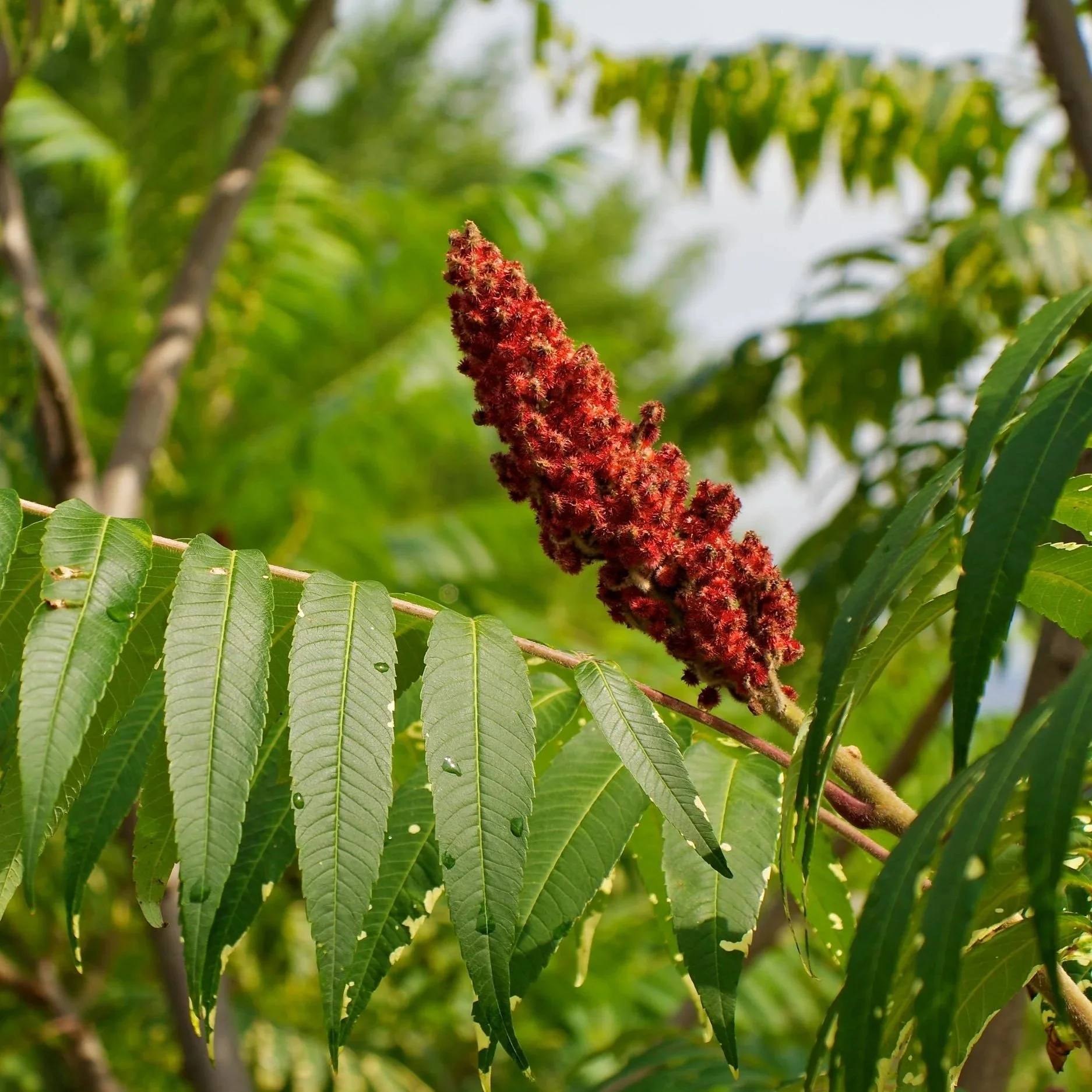 Image 2 of 3
 Image 3 of 3
Rhus typhina
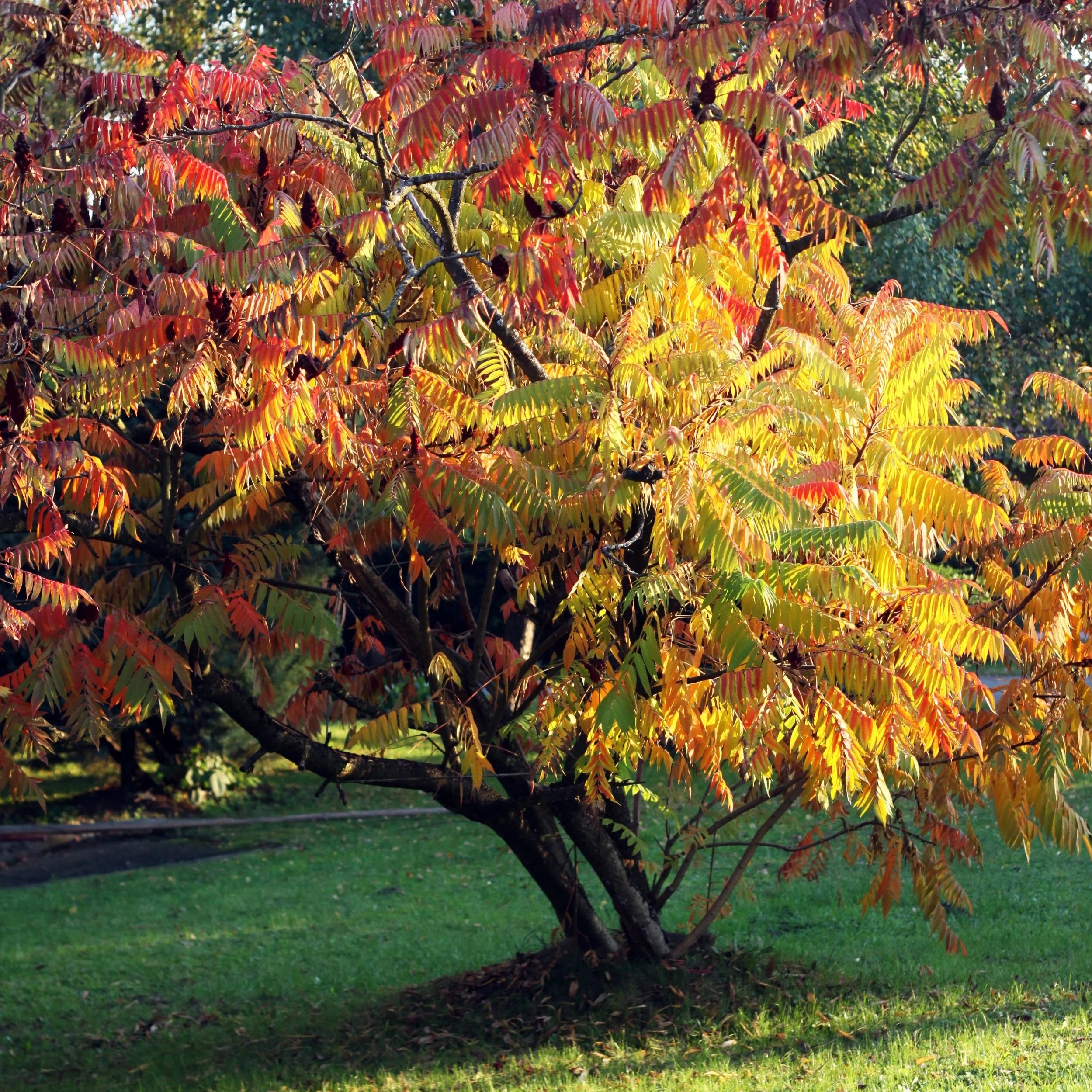
The Staghorn Sumac is a bold, fast-growing native shrub or small tree known for its dramatic branching structure, velvety stems, and fiery red fall foliage. Its upright clusters of crimson seed heads persist through winter, adding striking visual interest while providing a valuable food source for wildlife.
Perfect for naturalized areas, slopes, and bold landscape statements, Staghorn Sumac thrives where other plants struggle and delivers unmatched seasonal color and texture.
AttributeDetails🌿 Botanical NameRhus typhina🏷️ Common NamesStaghorn Sumac, Velvet Sumac🌳 Mature Height10–25 feet🌐 Mature Width10–20 feet (spreads via colonies)📈 Growth RateFast (2–3 feet per year)⏳ Lifespan15–25 years (colonies persist much longer)🧊 USDA Zones3–8❄️ Chill Hours800–1,200 hours☀️ Sun PreferenceFull sun🧱 Soil TypeWell-drained soils; tolerates poor, rocky, sandy soils⚖️ Soil pHAcidic to neutral (5.0–7.0)💧 Water NeedsLow to moderate; drought-tolerant once established🌸 Flower ColorYellow-green cone-shaped clusters; early summer🍒 Fruit TypeFuzzy red berry clusters (drupes); persistent into winter🐝 PollinatorsAttracts bees and beneficial insects🌿 Growth HabitUpright, spreading colonies with open crown↔️ Spacing10–15 ft apart (or allow natural spreading)🏡 Landscape UsesNaturalized areas, erosion control, slopes, wildlife plantings🧹 Maintenance LevelLow
🌸 Supports pollinators with nectar-rich summer blooms
🍒 Provides winter food for birds and small mammals
🌱 Excellent for restoring poor soils and disturbed sites
🌧️ Stabilizes slopes and prevents erosion with spreading root systems
✅ Pros⚠️ Cons🍁 Brilliant red-orange fall color is unmatched🌱 Spreads aggressively through root suckers🌿 Extremely hardy and thrives in poor soils🏡 Not ideal for small, formal landscapes🐝 Strong pollinator and wildlife support✂️ Requires control if spreading is unwanted💧 Highly drought-tolerant once established🌿 Can form dense colonies over time🧬 Unique texture and architectural branching⚠️ Sap may irritate sensitive skin in some individuals
🛁 Water thoroughly before and after planting to reduce transplant shock
🕳️ Plant in a well-drained location at the same depth as nursery level
🌾 Mulch lightly to retain moisture, especially during establishment
💦 Water regularly during the first growing season; minimal watering after
✂️ Remove suckers if you want to control spread, or allow for natural colonies
🧪 Fertilization is rarely needed; thrives in low-fertility soils
The Staghorn Sumac is a rugged, eye-catching native that delivers explosive fall color, unique texture, and exceptional resilience. Ideal for large spaces, slopes, or wild landscapes, it offers a powerful combination of beauty and ecological function with minimal maintenance.
Rhus typhina
The Staghorn Sumac is a bold, fast-growing native shrub or small tree known for its dramatic branching structure, velvety stems, and fiery red fall foliage. Its upright clusters of crimson seed heads persist through winter, adding striking visual interest while providing a valuable food source for wildlife.
Perfect for naturalized areas, slopes, and bold landscape statements, Staghorn Sumac thrives where other plants struggle and delivers unmatched seasonal color and texture.
AttributeDetails🌿 Botanical NameRhus typhina🏷️ Common NamesStaghorn Sumac, Velvet Sumac🌳 Mature Height10–25 feet🌐 Mature Width10–20 feet (spreads via colonies)📈 Growth RateFast (2–3 feet per year)⏳ Lifespan15–25 years (colonies persist much longer)🧊 USDA Zones3–8❄️ Chill Hours800–1,200 hours☀️ Sun PreferenceFull sun🧱 Soil TypeWell-drained soils; tolerates poor, rocky, sandy soils⚖️ Soil pHAcidic to neutral (5.0–7.0)💧 Water NeedsLow to moderate; drought-tolerant once established🌸 Flower ColorYellow-green cone-shaped clusters; early summer🍒 Fruit TypeFuzzy red berry clusters (drupes); persistent into winter🐝 PollinatorsAttracts bees and beneficial insects🌿 Growth HabitUpright, spreading colonies with open crown↔️ Spacing10–15 ft apart (or allow natural spreading)🏡 Landscape UsesNaturalized areas, erosion control, slopes, wildlife plantings🧹 Maintenance LevelLow
🌸 Supports pollinators with nectar-rich summer blooms
🍒 Provides winter food for birds and small mammals
🌱 Excellent for restoring poor soils and disturbed sites
🌧️ Stabilizes slopes and prevents erosion with spreading root systems
✅ Pros⚠️ Cons🍁 Brilliant red-orange fall color is unmatched🌱 Spreads aggressively through root suckers🌿 Extremely hardy and thrives in poor soils🏡 Not ideal for small, formal landscapes🐝 Strong pollinator and wildlife support✂️ Requires control if spreading is unwanted💧 Highly drought-tolerant once established🌿 Can form dense colonies over time🧬 Unique texture and architectural branching⚠️ Sap may irritate sensitive skin in some individuals
🛁 Water thoroughly before and after planting to reduce transplant shock
🕳️ Plant in a well-drained location at the same depth as nursery level
🌾 Mulch lightly to retain moisture, especially during establishment
💦 Water regularly during the first growing season; minimal watering after
✂️ Remove suckers if you want to control spread, or allow for natural colonies
🧪 Fertilization is rarely needed; thrives in low-fertility soils
The Staghorn Sumac is a rugged, eye-catching native that delivers explosive fall color, unique texture, and exceptional resilience. Ideal for large spaces, slopes, or wild landscapes, it offers a powerful combination of beauty and ecological function with minimal maintenance.