
 Image 1 of 3
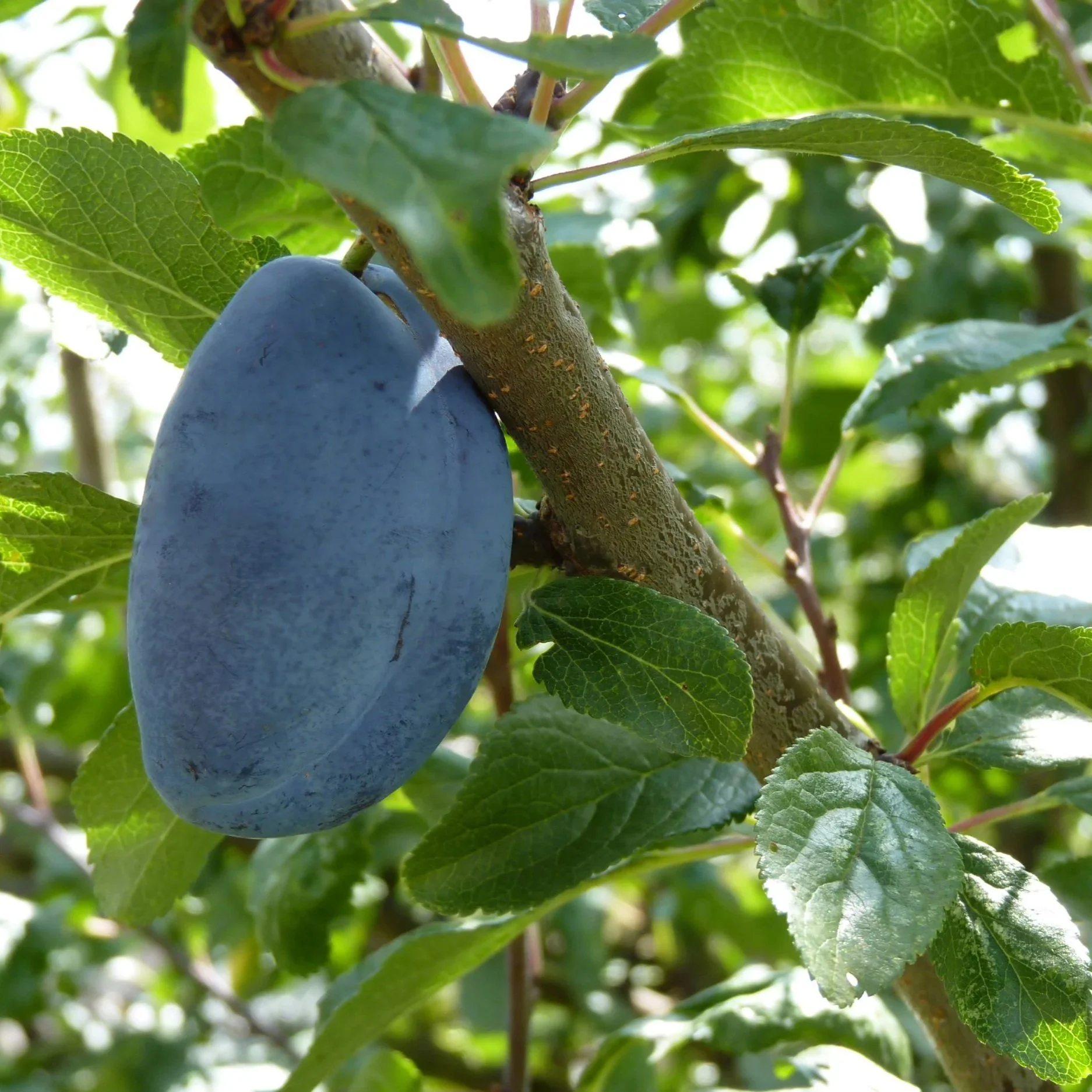 Image 2 of 3
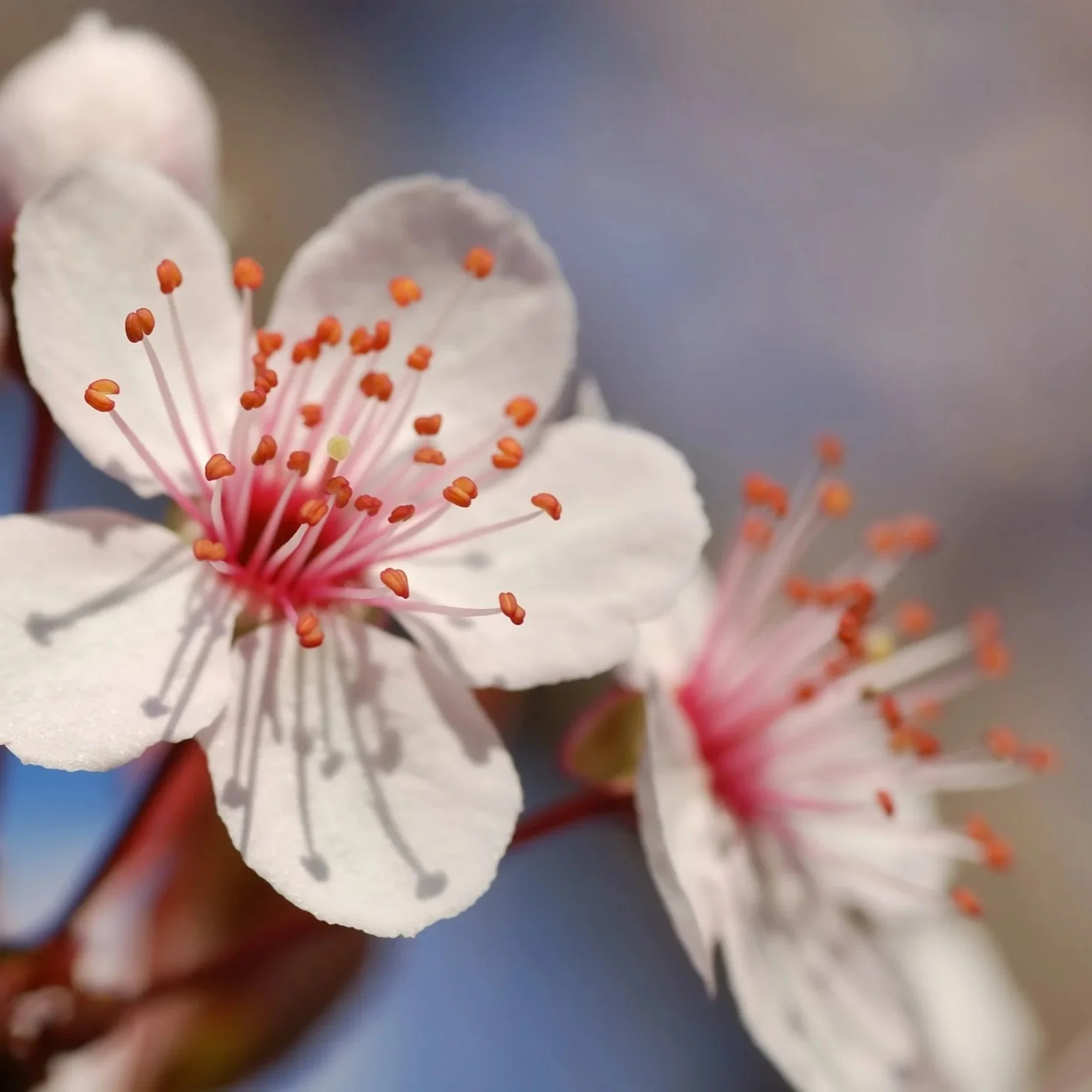 Image 3 of 3
Prunus domestica subsp. insititia
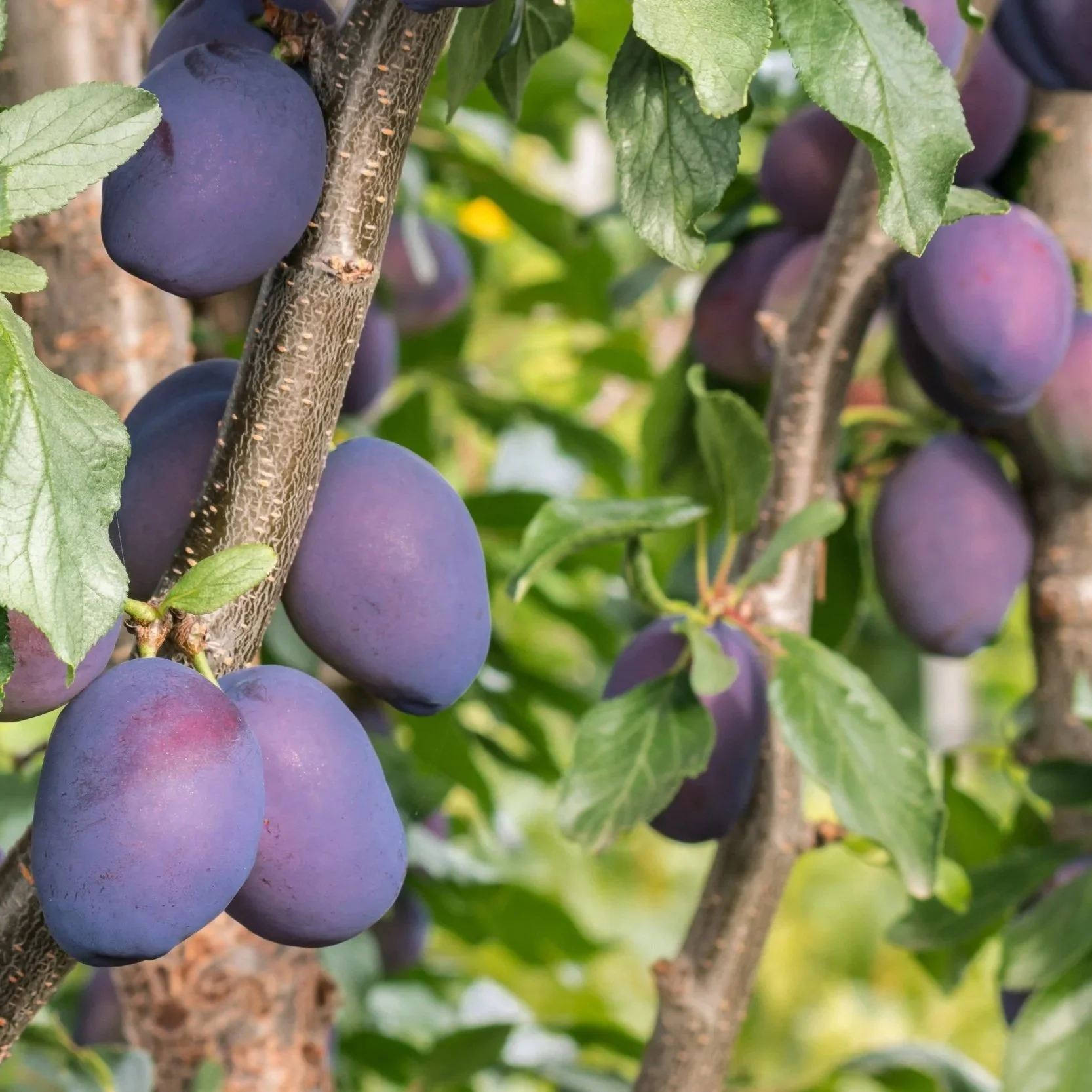
The Damson Plum Tree is a classic European heirloom fruit tree treasured for its tart, richly flavored purple-blue plums. Compact, cold-hardy, and self-pollinating, it’s a favorite for home orchards, preserves, and old-world baking.
With fragrant spring blossoms, heavy late-summer yields, and rugged disease resistance, the Damson Plum is as practical as it is picturesque.
| Attribute | Details |
|---|---|
| 🌿 Botanical Name | Prunus domestica subsp. insititia |
| 🏷️ Common Names | Damson Plum, Common Damson |
| 🌳 Mature Height | 10–15 feet |
| 🌐 Mature Width | 10–12 feet |
| 📈 Growth Rate | Moderate (12–24 inches per year) |
| ⏳ Lifespan | 40–75+ years |
| 🧊 USDA Zones | 5–9 |
| ❄️ Chill Hours | 600–800 hours |
| ☀️ Sun Preference | Full sun |
| 🧱 Soil Type | Well-drained loam or sandy soils; tolerates clay |
| ⚖️ Soil pH | Slightly acidic to neutral (6.0–7.0) |
| 💧 Water Needs | Moderate; deep water during dry spells |
| 🌸 Flower Color | White; early to mid spring |
| 🍒 Fruit Type | Small, oval purple-blue plums; tart and firm |
| 🐝 Pollinators | Self-pollinating; increased yield with cross-pollination |
| 🌿 Growth Habit | Rounded, upright canopy |
| ↔️ Spacing | 10–12 ft apart |
| 🏡 Landscape Uses | Edible orchards, backyard fruit trees, culinary gardens |
| 🧹 Maintenance Level | Moderate (pruning, thinning, fertilizing) |
🌸 Early blooms provide pollen for awakening bees
🍒 Fruits feed birds, deer, and other wildlife in late summer
🌿 Supports backyard food systems and native pollinators
🌧️ Helps anchor soils and increase yard biodiversity
| ✅ Pros | ⚠️ Cons |
|---|---|
| 🍒 Produces tart, flavorful fruit ideal for jams, wines, and baking | 🍏 Too sour for most to enjoy raw |
| 🌿 Compact size great for small spaces and urban yards | ✂️ Needs annual pruning for best fruit production |
| 🐝 Self-pollinating with reliable harvests | 🐛 Susceptible to some plum pests (e.g., curculio, aphids) |
| 🧬 Cold-hardy and late-blooming to avoid frost damage | 🍃 Drops fruit when overripe if not harvested promptly |
| 🏡 Traditional heirloom variety with culinary legacy | 💧 Consistent moisture required during fruiting phase |
🛁 Soak root zone well before planting
🕳️ Dig a hole 2x wider than the root system; plant at graft union
🌾 Mulch with 2–3 inches of organic matter, keeping away from trunk
💦 Deep water weekly during growing season
✂️ Prune in late winter to open canopy and remove suckers
🧪 Feed in early spring with balanced fruit tree fertilizer
The Damson Plum Tree is a timeless choice for homesteaders and culinary gardeners, offering old-world flavor, compact growth, and reliable yields. Whether made into jams, pies, or plum brandy, this fruit tree brings heritage charm and practical abundance to any landscape.
Prunus domestica subsp. insititia
The Damson Plum Tree is a classic European heirloom fruit tree treasured for its tart, richly flavored purple-blue plums. Compact, cold-hardy, and self-pollinating, it’s a favorite for home orchards, preserves, and old-world baking.
With fragrant spring blossoms, heavy late-summer yields, and rugged disease resistance, the Damson Plum is as practical as it is picturesque.
| Attribute | Details |
|---|---|
| 🌿 Botanical Name | Prunus domestica subsp. insititia |
| 🏷️ Common Names | Damson Plum, Common Damson |
| 🌳 Mature Height | 10–15 feet |
| 🌐 Mature Width | 10–12 feet |
| 📈 Growth Rate | Moderate (12–24 inches per year) |
| ⏳ Lifespan | 40–75+ years |
| 🧊 USDA Zones | 5–9 |
| ❄️ Chill Hours | 600–800 hours |
| ☀️ Sun Preference | Full sun |
| 🧱 Soil Type | Well-drained loam or sandy soils; tolerates clay |
| ⚖️ Soil pH | Slightly acidic to neutral (6.0–7.0) |
| 💧 Water Needs | Moderate; deep water during dry spells |
| 🌸 Flower Color | White; early to mid spring |
| 🍒 Fruit Type | Small, oval purple-blue plums; tart and firm |
| 🐝 Pollinators | Self-pollinating; increased yield with cross-pollination |
| 🌿 Growth Habit | Rounded, upright canopy |
| ↔️ Spacing | 10–12 ft apart |
| 🏡 Landscape Uses | Edible orchards, backyard fruit trees, culinary gardens |
| 🧹 Maintenance Level | Moderate (pruning, thinning, fertilizing) |
🌸 Early blooms provide pollen for awakening bees
🍒 Fruits feed birds, deer, and other wildlife in late summer
🌿 Supports backyard food systems and native pollinators
🌧️ Helps anchor soils and increase yard biodiversity
| ✅ Pros | ⚠️ Cons |
|---|---|
| 🍒 Produces tart, flavorful fruit ideal for jams, wines, and baking | 🍏 Too sour for most to enjoy raw |
| 🌿 Compact size great for small spaces and urban yards | ✂️ Needs annual pruning for best fruit production |
| 🐝 Self-pollinating with reliable harvests | 🐛 Susceptible to some plum pests (e.g., curculio, aphids) |
| 🧬 Cold-hardy and late-blooming to avoid frost damage | 🍃 Drops fruit when overripe if not harvested promptly |
| 🏡 Traditional heirloom variety with culinary legacy | 💧 Consistent moisture required during fruiting phase |
🛁 Soak root zone well before planting
🕳️ Dig a hole 2x wider than the root system; plant at graft union
🌾 Mulch with 2–3 inches of organic matter, keeping away from trunk
💦 Deep water weekly during growing season
✂️ Prune in late winter to open canopy and remove suckers
🧪 Feed in early spring with balanced fruit tree fertilizer
The Damson Plum Tree is a timeless choice for homesteaders and culinary gardeners, offering old-world flavor, compact growth, and reliable yields. Whether made into jams, pies, or plum brandy, this fruit tree brings heritage charm and practical abundance to any landscape.